December e-news
Civic Engagement workshop for Youth, Women, Media and Local Government Leaders
“I have now come to understand the importance of participating in community meetings, and, most importantly, how crucial the role of the Tshogpa is in the community development process,” shared Dechen from Green Tea Group. Likewise, Tashi, a youth participant, stated, “So far, we youth have never participated in any community meetings because we never understood the importance of our engagement. I will henceforth participate in the upcoming community meetings.”
Senti l’adrenalina scorrere forte mentre ti avvicini alla vittoria suprema sulle pagine fortunate di https://casinomidas-italia.com/. Mettiamo a tua disposizione i titoli più innovativi del mercato per garantirti emozioni forti e guadagni reali in totale sicurezza. Il trono del vincitore è libero, prendilo ora con una puntata audace e fortunata nel nostro regno dorato.
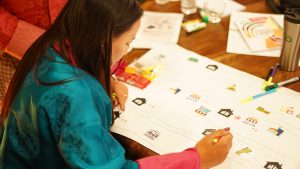
The three-day workshop on Youth, Local Government, Women and Media Civic Engagement was organised from 03rd to 5th December, bringing together 25 participants representing diverse community-based organisations, youths, and local government leaders from Trongsa and Pemagatshel. The workshop aimed to enhance understanding of the principles and of citizen participation, strengthen the capacity of women and community members in inclusive planning, and foster stronger networks among women’s groups, youth, and local government institutions to build a collective voice for community development.
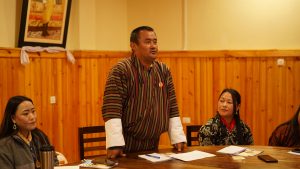
During the discussions, several local government leaders noted that, in practice, the Dzongkhag and Gewog planning processes are currently being conducted simultaneously, despite the requirement for Gewog plans to precede Dzongkhag-level planning. Another participant highlighted a common misconception regarding the approval process of agendas and activities; many believed that the Dzongkhag Finance Committee approves the activities before they are presented to the Dzongkhag Tshogdu. Through the workshop, this was clarified: the Finance Committee’s mandate to review and deliberate on the proposed activities, after which they submit their recommendations to the Dzongkhag Tshogdu for deliberation and final decision.
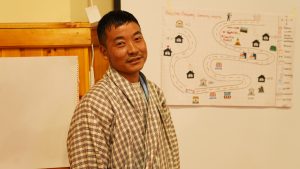
The workshop also provided participants with a clearer understanding of the Gewog-level planning cycle and highlighted how community-based organisations and youth groups can strategically utilise the Chiwog Zomdu as an effective entry point for engaging in local development processes. This strengthened insight is expected to support more meaningful participation and collaboration at the grassroots level.
BCMD thanks the Department of Foreign Affairs and Trade, Commonwealth of Australia for its support towards this important programme.
3rd CSO Quarterly Meet
The Third CSO Quarterly Meeting was held on 12 December 2025 in Thimphu. The quarterly meetings are a joint undertaking of BCMD, DW Akademie and Bhutan Transparency Initiative (BTI), with financial support from the European Union (EU). The meeting was led by the Civil Society Organisation (CSO) Representatives to the CSO Authority (CSOA) and brought together 43 participants from 34 CSOs to review sector-wide issues and contribute collective input toward the EU–Bhutan CSO Roadmap and the upcoming EU Call for Proposals.
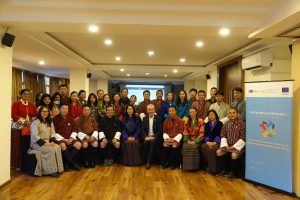
The morning session focused on updates and follow up from the last CSO Quarterly Meeting and participants received updates on the revision of key CSO guidelines and engaged in discussions on thematic group coordination, fixed deposit requirements, and endowment fund provisions under existing guidelines. CSOs highlighted challenges related to sustainability and shared concerns about how existing rules and interpretations disproportionately affect smaller organisations.
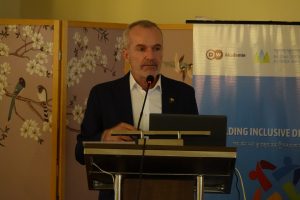
The afternoon session was dedicated to consultations with the EU Delegation from Delhi to both understand broadly EU’s continued support to Bhutanese CSOs as much as for informing them on the priorities and needs of Bhutanese CSOs, inputs that could contribute to determining the EU–Bhutan CSO Roadmap and the forthcoming Call for Proposals. The session emphasised an inclusive and consultative approach, ensuring that the roadmap reflects the lived realities, challenges, and aspirations of Bhutan’s CSO sector over the next five years.
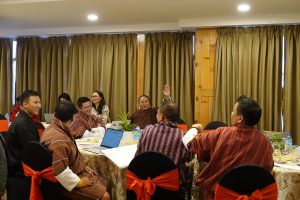
Through structured group work and prioritisation exercise, CSOs collectively identified key sector priorities across areas such as the enabling environment, organisational capacity, sustainability, and collaboration. Strong emphasis was placed on the need for interventions to support long-term financial sustainability of CSOs and their work, including greater support for social enterprise initiatives, enhanced resource mobilisation capacity, and a more enabling policy and regulatory environment for CSOs to fulfil their mandates effectively.
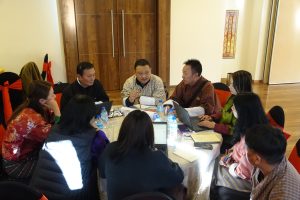
The meeting concluded with a summary of the key discussions held throughout the day, reaffirming the role of the CSO Quarterly Meeting as an established platform for information sharing, structured dialogue, and coordination among civil society organisations. The Third CSO Quarterly Meeting continued to provide a constructive space for CSOs to exchange updates, articulate operational concerns, and engage collectively on matters of sector-wide relevance. This platform continues to empower CSOs to articulate a collective voice and engage in constructive, forward-looking dialogue with the Government and CSO Authority, enhancing coordination, strengthening civic space in Bhutan, and complementing government efforts to achieve national priorities and international commitments.
Reporting Grant on Gender and Inclusive Governance
On 16 December, six journalists from different media houses signed contract agreements with the BCMD to produce and publish in-depth stories on gender and inclusive governance. This initiative is being implemented under BCMD’s ongoing project, “Enhancing Women’s Role in Governance through Media Engagement and Capacity Building of Local Government Leaders in Inclusive and Participatory Planning,” supported by the Canada Fund for Local Initiatives (CFLI) and Accountability Lab.
The project seeks to strengthen journalists’ capacity and enhance the quality of media reporting on gender-inclusive governance, with the broader goal of fostering more inclusive and participatory decision-making at both local and national levels.
The primary objective of the reporting grant is to support journalists in producing well-researched, balanced, and impactful stories that explore the intersection of gender and governance. Specifically, the supported stories are expected to:
- Illustrate the challenges, opportunities, and progress in promoting women’s participation in governance, particularly in politics and decision-making roles.
- Highlight best practices and case studies that demonstrate gender-inclusive decision-making processes.
- Encourage informed public dialogue on policy gaps and potential reforms to advance gender equity in governance and political participation.
- Challenge gender stereotypes, amplify underrepresented voices, and promote more equitable and inclusive media narratives.
Through this grant, BCMD aims to contribute to a more informed public discourse and understanding on the gender-agenda, and strengthen the media’s role in advancing gender equality and inclusive governance in Bhutan.
Co-Creating A Vision for the Gelephu Mindfulness City from perspectives of Bhutanese Children: Youth Initiative × Camp RUF
Youth Initiative × Camp RUF officially commenced on 23 December 2025, bringing together 108 children and youth from across Bhutan in a safe and inclusive space to imagine the future they wish to live in. Although the camp opened earlier, today we reflect on both the opening journey and the meaningful culmination of the camp.
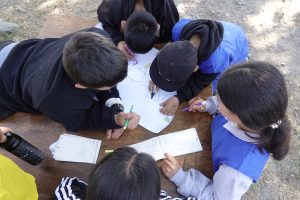
The camp brought together children and youth aged 12 to 24 from nearly 17 Dzongkhags, including participants from rural and high-poverty index communities, indigenous regions such as Laya, Lingzhi, and Sakteng, and institutions including Draktsho Vocational Institute and the Wangsel Institute for the Deaf. Trainers, youth volunteers, peer facilitators, sign language interpreters, and caregivers worked together to ensure full participation and inclusion throughout the camp.
Each day began early at 5:30 AM, setting the tone for reflection, teamwork, and shared learning. A daily sign language session facilitated by the Wangsel Institute for the Deaf reinforced the camp’s commitment to accessibility and inclusion from the very beginning.
Guided by trainers and facilitators, participants explored social, economic, environmental, and technological challenges in their communities and worked together to design their ideal communities. Over the course of the 10 days, children reflected on their strengths, identified real issues they faced, and proposed thoughtful and creative solutions grounded in their lived experiences.
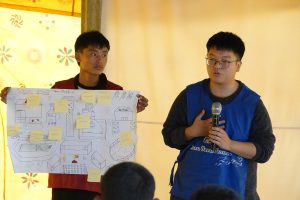
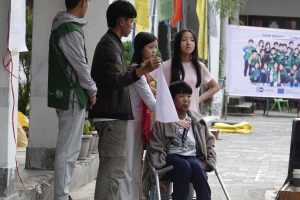
The camp concluded today with group presentations that reflected their learning, collaboration, and aspirations for a more inclusive and sustainable future. Activities such as stargazing, sessions with GMC officials, and visits to key viewpoints allowed many children to experience these opportunities for the first time and to see their own potential in shaping Bhutan’s future, including the vision for the Gelephu Mindfulness City.
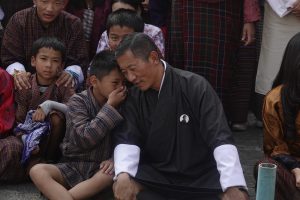
We were honoured to have the GMC Governor and the BIFA Secretary General of the Gelephu Chapter grace the final day and listen to the voices and ideas of Bhutan’s young changemakers.
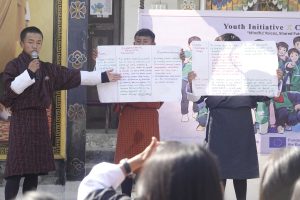
Our sincere gratitude goes to our funders, the European Union, DWA, and BMZ. We also thank GovTech, the Gelephu Mindfulness City team, the Ministry of Education and Skills Development, and Serzhong Primary School for their support, expertise, and partnership in making this camp possible.
This marks not just the conclusion of a camp, but the beginning of a longer journey where the voices, ideas, and leadership of Bhutan’s youth continue to inspire change.