BCMD eNews: October 2026
October
Students learn to tell news from noise
1–9 OCTOBER · TRONGSA, TRASHIGANG AND SAMTSE
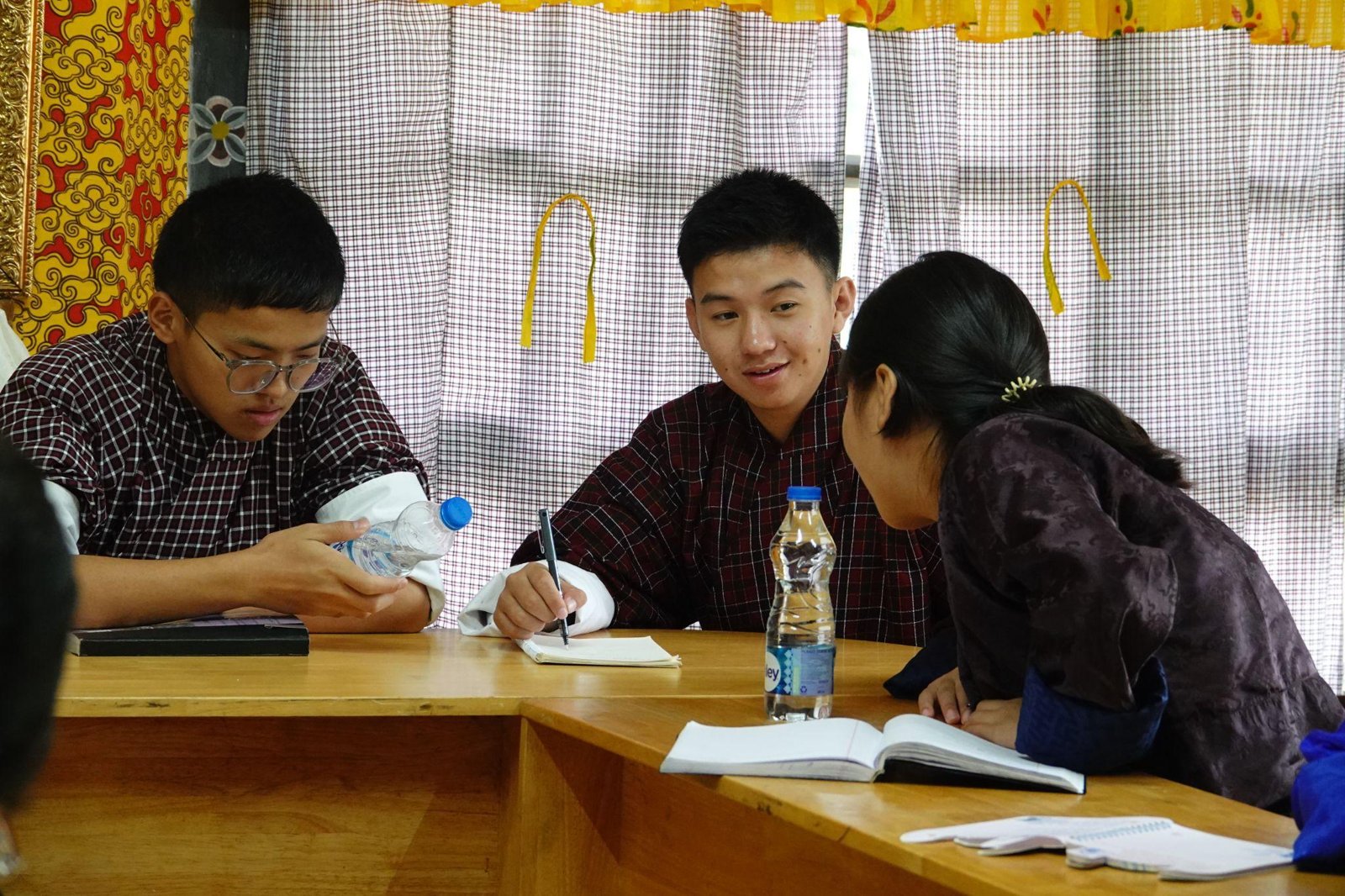
Our feeds mix news with advertisements, rumours and, more and more, AI-generated images and videos that look real but are not. To help young people tell news from noise, the BCMD team took a new two-hour workshop, Smart News Consumer, on the road from Thimphu to Trongsa, Trashigang and Samtse.
In all, 113 Media and Democracy Club members from seven schools and Sherubtse College took part. They sorted messages into news and its four ‘neighbours’: promotion, propaganda, raw information and entertainment. They learned the three values that turn information into news, and used a simple checklist to judge whether a source can be trusted. In the News Detective activity, groups tested a viral-style post against a real news article and decided whether to share it, check it first or leave it alone.
‘Just because something is viral does not mean it is true, and just because I can share it does not mean I should.’
— MDC member, Sherubtse College
The lesson running through every session: looking real is not the same as being real. Next time you see something online, ask three questions: who made it, what is their aim, and what is the proof?
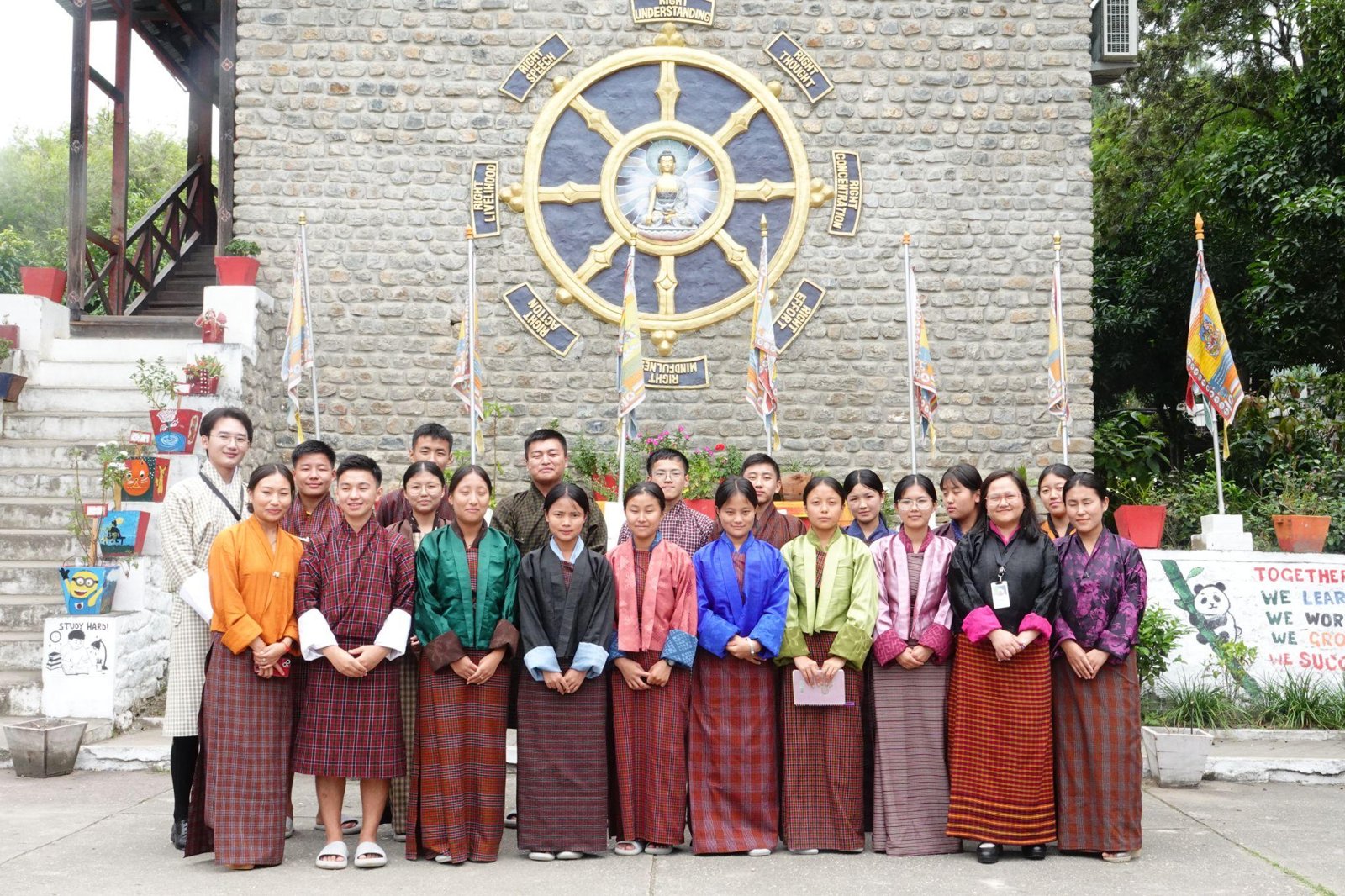
Part of the EU-funded ‘Building Inclusive Democracy’ project, in partnership with DW Akademie.
Local leaders meet the CSOs working in their districts
7–13 OCTOBER · TRONGSA, TRASHIGANG AND SAMTSE
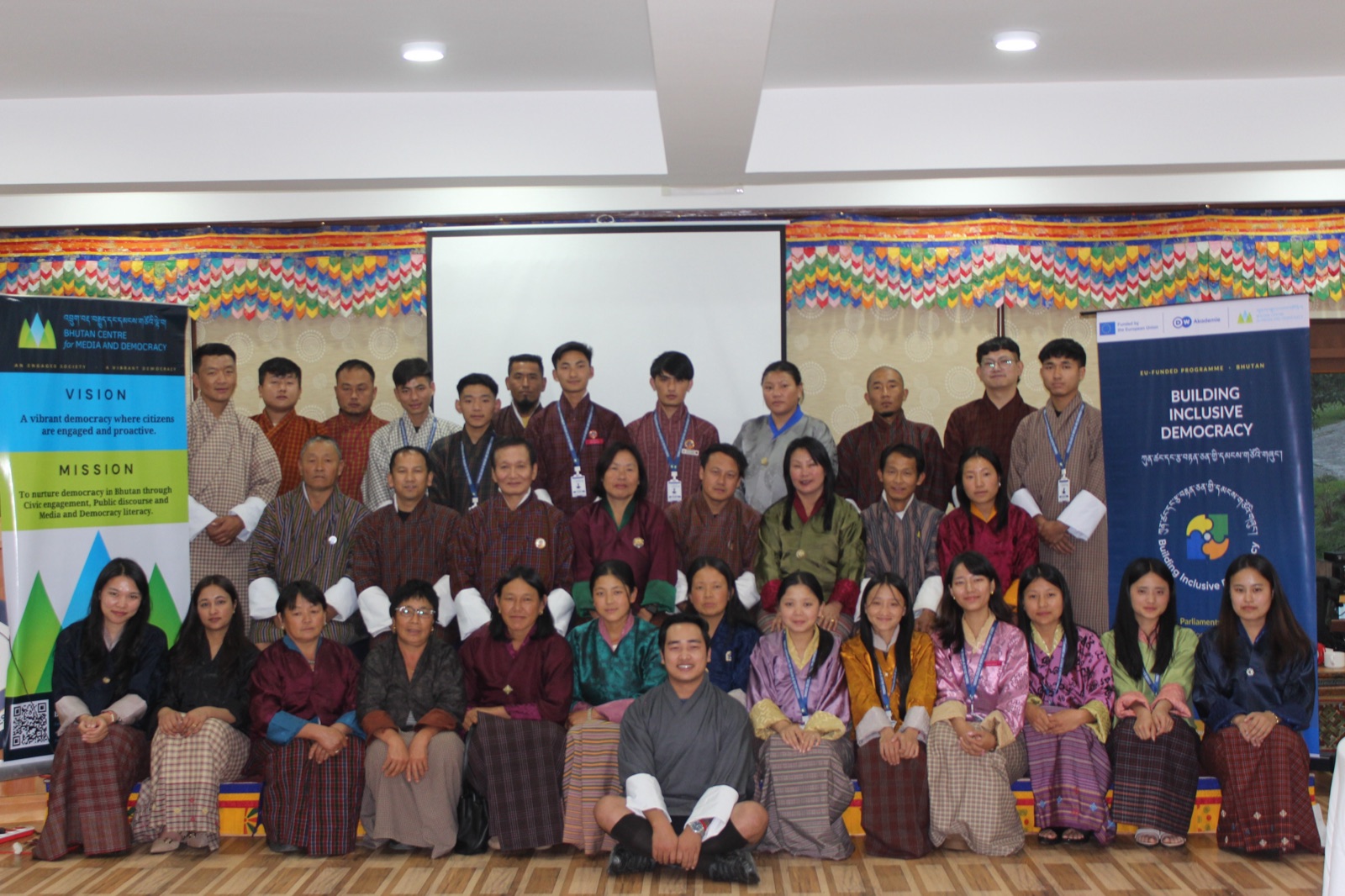
The second round of our Local Exchange Programme brought Local Government leaders, community members and students face to face with six civil society organisations in Trongsa on 7 October, Trashigang on 10 October and Samtse on 13 October. In all, 123 people took part.
Ability Bhutan Society, the Bhutan Stroke Foundation, Queer Voices of Bhutan, Chithuen Phendhey Association, the Bhutan Transparency Initiative and BCMD each explained what they do, and then the questions came. How do we ask a CSO for help? Where can a family find a wheelchair or a hearing aid? What are the warning signs of a stroke? How can someone be supported after rehabilitation? Are there internships for young people?
One message came up in every district: most people know only a handful of CSOs, such as RENEW and Tarayana, and miss the services others offer. Participants had ideas to change that, from listing CSO services on the G2C portal to sharing short videos on TikTok and passing information on through schools.
Part of the EU-funded ‘Building Inclusive Democracy’ project, in partnership with DW Akademie.
Civil society brings its voice to the Marriage Act review
23 OCTOBER · THIMPHU
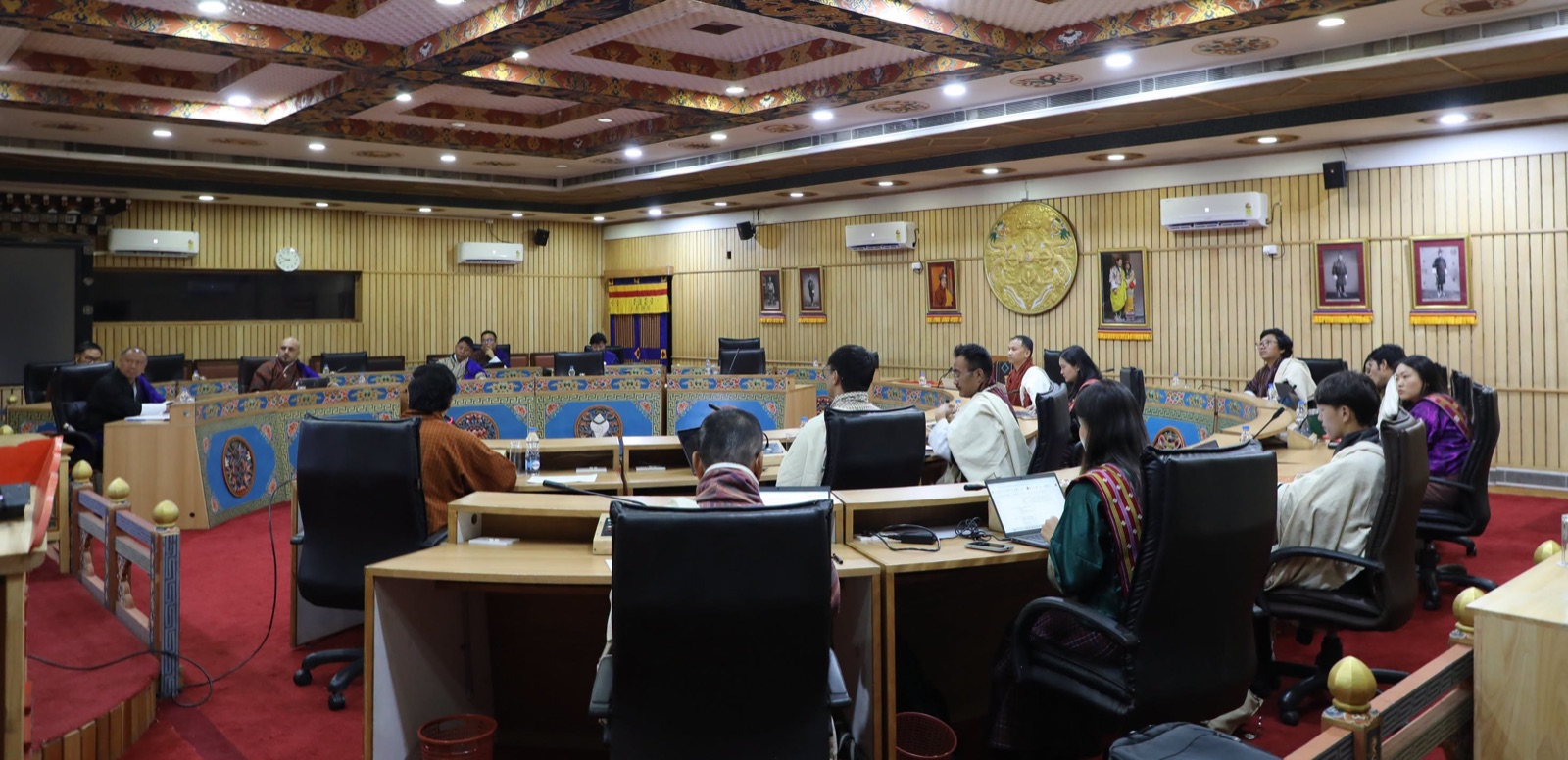
The Marriage Act of Bhutan dates from 1980, and Parliament is now reviewing it. At BCMD’s request, the National Council’s Natural Resources and Environment Committee sat down with civil society on 23 October to hear what should change. Nine CSO representatives and fourteen parliamentarians and secretariat officials took part.
The agenda came from the CSOs’ own written submissions. They argued that the rules on child alimony and compensation, written in 1980, no longer reflect today’s costs and can weigh heavily on unemployed parents and farmers. They also described how hard it is to collect child support when a parent is struggling or has moved abroad. One Committee member suggested basing child support on the real cost of raising a child where the child lives.
Queer Voices of Bhutan shared a community survey in which 48 of 54 respondents supported the option for same-gender and gender-diverse couples to marry legally. The Committee will consider the points raised in its deliberations on the Marriage (Amendment) Bill, which is due to be presented in the upcoming session.
The Druk Journal asks how Bhutan can meet AI on its own terms
23 OCTOBER · THIMPHU
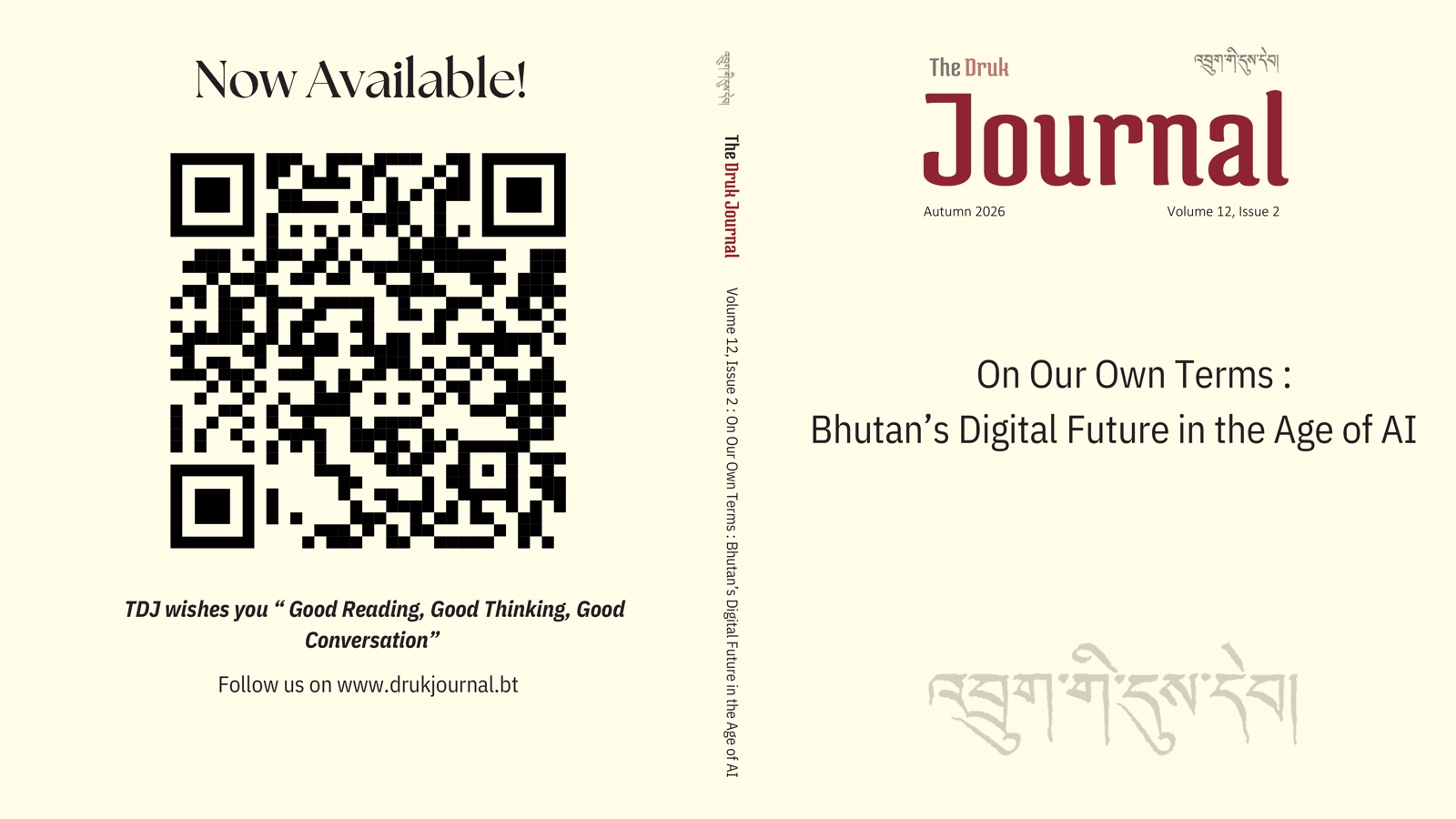
The Autumn 2026 issue of The Druk Journal, ‘On Our Own Terms: Bhutan’s Digital Future in the Age of AI’ (Volume 12, Issue 2), is out now.
Bhutan has long moved with pragmatic caution, balancing traditional values with global trends. Being the last country to introduce television and the internet sometimes made it look slow, but it also spared society some of their damaging side effects. The preface argues that the same pragmatic wisdom now asks Bhutan to move with the times, and poses the question at the heart of the issue: how can generative AI improve governance and ease daily life while safeguarding the culture and community bonds that define the nation?
Twenty articles take up that question in four sections. AI and Society, opened by Dzongsar Khyentse Rinpoche, looks at creativity and the arts, the needs of people with disabilities, and livelihoods in farming and dairy. AI and Governance asks whether the civil service, e-government and the legal system are ready. AI and Education follows how AI is changing classrooms and campuses, and International Perspectives brings in lessons from law, technology, education and development beyond Bhutan’s borders.
‘AI is not an apparatus for experts but a utility for the average citizen.’
— Preface, The Druk Journal, Autumn 2026
Read the preface on bcmd.bt and find out more at drukjournal.bt.
Taking Thuenlam to Phnom Penh
23–25 OCTOBER · PHNOM PENH, CAMBODIA
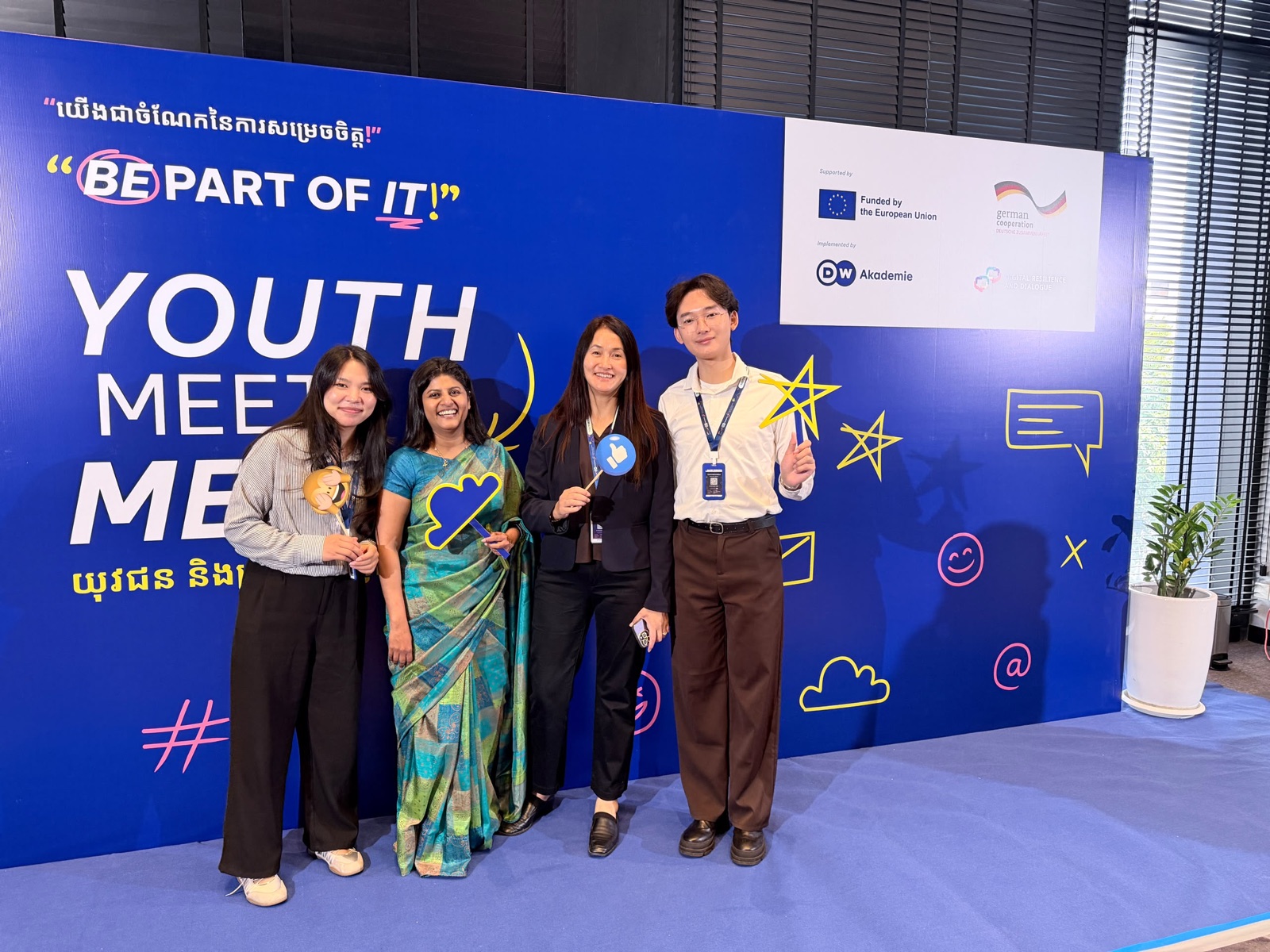
BCMD joined the Youth Meets Media Conference: MIL and AI in Central Asia and Southeast Asia, where it facilitated a 90-minute workshop, ‘THUENLAM: Empowering Youth to Transform Information, Media and AI Challenges into Evidence-Based Policy Action’.
Drawing on BCMD’s GNH-based Participatory Community Analysis Toolkit, participants from Cambodia, Germany and Mongolia mapped their media and digital environments, identified problems, traced their root causes and developed evidence-based policy recommendations and practical solutions.
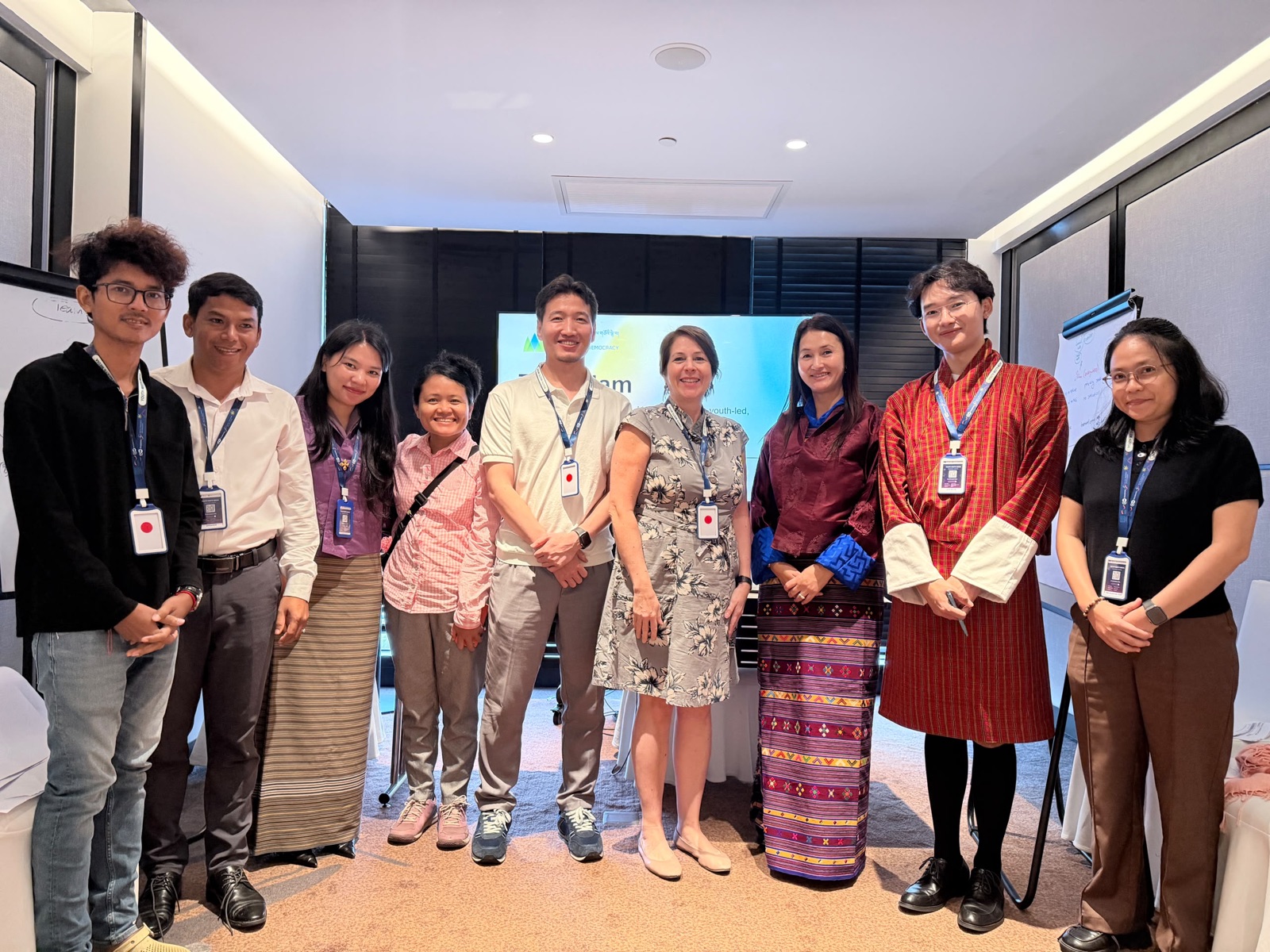
Discussions moved from disinformation, fake news and online scams to the wider use of propaganda to shape public narratives and silence dissent. The session showed that the method travels well, giving young people anywhere a practical way to connect everyday digital challenges with their root causes.
Thank you
To the students, teachers, principals and MDC Coordinators who welcomed us on the road, to the Local Government leaders, CSOs and parliamentarians who joined our exchanges and consultations, to the conference organisers and participants in Phnom Penh, and to every reader who follows our work: thank you. None of this happens without you.
Stay in touch at bcmd.bt or write to us at bcmd@bcmd.bt.