October e-News
GNH-Based Participatory Planning and Community Analysis
The Workshop on GNH-Based Participatory Planning and Community Analysis was conducted from 7-13 October 2025, with 37 Local government leaders from the 12 gewogs of Tsirang Dzongkhag. The workshop opened with a deep reflection on Bhutan’s local governance system and the realities of decentralisation in practice, from local government rules and regulations to local government planning, prioritisation and budgeting processes.
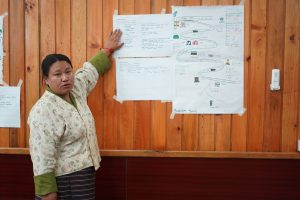
While decentralisation has empowered local governments to plan and prioritise development in their communities, participants highlighted several ongoing challenges that hinder its effectiveness., These include unclear agenda setting, poor documentation, citizen fatigue from frequent meetings, and limited capacity to support meaningful participatory planning. They also observed that many citizens continue to view governance as a government function alone, rather than a shared, collective and collaborative responsibility.
“It is difficult to get community participation during chiwog zomdu meetings. Many people attend only if there are direct benefits for them,” shared one participant, highlighting the ongoing need for civic awareness and awareness, and trust-building at the grassroots level.
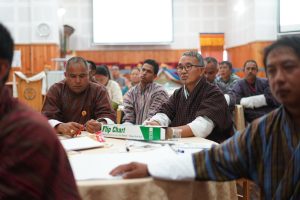
Participants explored the planning and communication flow across the Dzongkhag, Gewog and Chiwog levels. As per the Local Development Planning Manual 2021, activities approved at the gewog level must be submitted to the Dzongkhag for information, while activities requiring higher budgets or support from central agencies are forwarded to the Dzongkhag as formal proposals derived from consultations with the community through the chiwog zomdu. Many participants conceded that these linkages were not fully understood before.
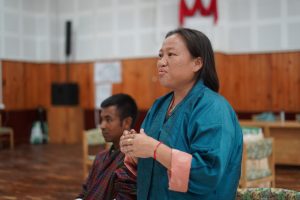
The session clarified roles, responsibilities, and the procedural flow in the local planning and prioritisation processes and structures, particularly the roles of the Agenda Finalisation Committee, which is responsible for reviewing and categorising agendas by constituency and subject, and also visited the Protocol for Local Government Proceedings (publication of the Department of Local Governance and Disaster Management) to understand the roles of the relevant LG actors and functions therein.
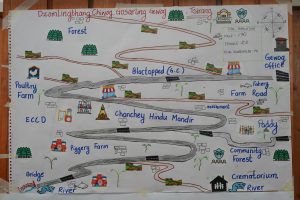
Participants were introduced to eight participatory planning tools under four GNH themes, covering key aspects such as social and economic resource mapping, gender analysis, stakeholder identification, and public service delivery analysis. Using these tools, they learnt the development of inclusive community development plans, which were presented in the plenary session. Following the training, participants will work collaboratively with community members to co-develop a comprehensive community development plan, which will be showcased during a Town Hall in December.
BCMD thanks the Bhutan Foundation for its support towards this important programme.
Citizen Empowerment Workshop
How can communities truly thrive if citizens remain silent spectators in decisions that affect their everyday lives?
For many residents, this question came alive during BCMD’s Citizen Empowerment Workshop that began from 13th to 18th October 2025. The workshop brought together farmers, youth, women, and ex-local government leaders in the 12 Gewogs of Tsirang to reflect on how every voice holds the power to determine and influence change in their communities.
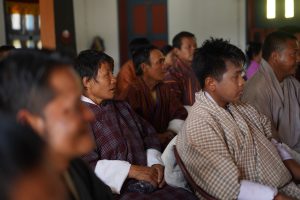
Discussions revealed that while citizens are often informed, they are not always consulted on issues such as community needs, budget availability and allocations and upcoming plans and programmes. The consultations also highlighted a pattern of procedural rather than participatory engagements. Although the structures for public consultation exist, many citizens still view these meetings as administrative obligations rather than opportunities to shape development. This points to a deeper need for civic empowerment where citizens recognise both their right and their responsibility to contribute to decision-making.
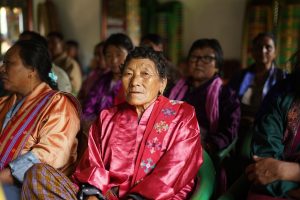
The workshop encouraged citizens to move from being passive listeners to active participants, engaging constructively with local government leaders to shape priorities and decisions that impact their everyday lives. Citizens were also reminded of their civic responsibilities, about the reciprocal obligations between the State and Citizens, in problem-solving and ensuring that interventions reflect community needs and values for better ownership and sustainability.
The experience will allow BCMD to integrate the lessons into its next phase of work as well as expansion of its GNH-based participatory planning programme in other districts. We thank the Bhutan Foundation for their support.
Social Media Ethics
BCMD engaged students of Royal Thimphu College in an interactive session on “Social Media Ethics: Media and Democracy Literacy” on 25th October 2025. The session explored the power of media and its evolving role in shaping public discourse from informing and educating to influencing and entertaining. Students reflected on balance, fairness, and bias in storytelling through creative exercises such as re-examining The Three Little Pigs & the Big Bad Wolf from multiple perspectives.
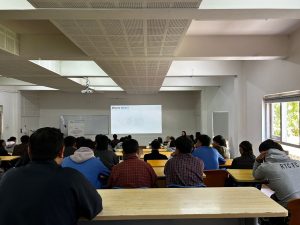
As native digital citizens and active content creators and consumers, students explored the Pillars of Digital Ethics and reflected on real-life scenarios involving privacy, defamation, and online conduct.
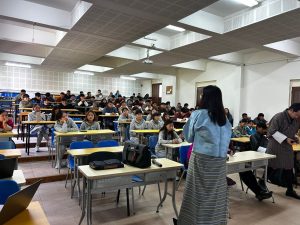
The session highlighted that Vlogging isn’t just storytelling; it’s storytelling with a purpose. They reflected on photos, posts, or videos shared online as carrying the power to influence and establish narratives, setting agenda and consciously or unconsciously building on empathy or confirmation bias . Emphasis was placed on mindful media engagement, using digital spaces as platforms for education, cultivating empathy, and promoting democratic participation. Each participant reflected on their individual responsibility as they navigated through the digital space, and beyond, into the physical realm and in their engagement with others.
Inclusive Journalism Practices Covering Gender and Governance
BCMD organised a two-day workshop on Inclusive Journalism Practices Covering Gender and Governance on the 27th and 28th of October 2025 in Paro. The workshop brought together 15 journalists from 7 public and private media houses and Kuzoo FM, and focused on enhancing journalists’ understanding of the intersections between gender, media, and governance. The two-day workshop facilitated in-depth discussions on women’s representation in governance and the persistent gap between Bhutan’s legal provisions for gender equality and their implementation in practise.
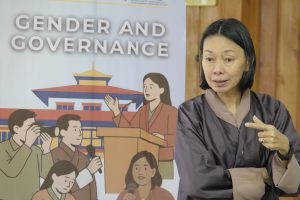
Participants critically examined how media narratives influence public perception and engagement in governance, policy and decision-making processes. Emphasis was placed on the principles of constructive, restorative and solution-based journalism, encouraging reporting that highlights not only challenges but also solutions, resilience, and good practices. The sessions further underscored the importance of applying a gender lens in journalistic practice, including the choice of language, framing of issues, and selection of sources.
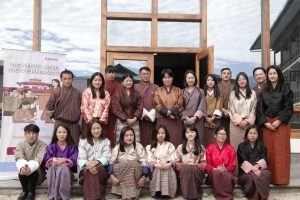
Through group exercises and case-based learning, journalists developed story concepts around gender and governance. The participants also engaged in carrying out field-based reporting using a gender-lens in news-reporting. The workshop concluded with participants reflecting deeply on the importance of integrating a gender perspective within media and policy spaces. Many acknowledged a renewed understanding that gender equality is not limited to empowering women alone, but entails ensuring balanced representation and engagement of both men and women in decision-making processes.
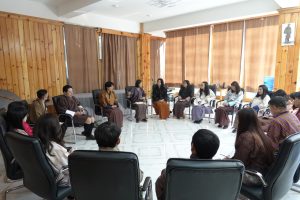
Participants also committed to advocating for greater inclusion of women’s voices in editorial policies and newsroom practices. The sessions also served as a platform for self-reflection, where journalists recognised the need for continuous learning, collaboration with experts, and more nuanced coverage of gender issues across diverse sectors beyond politics. The workshop thus fostered a shared commitment to advancing equitable representation and strengthening the role of media in promoting inclusive governance in practice.
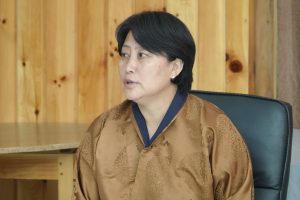
The programme was possible with support from the Canada Fund for Local Initiatives (CFLI).
Druk Journal Conversation: Mindful Governance, Mindful Society
About 270 Pelsups in Gelephu attended a conversation on the theme of The Druk Journal latest issue, “Mindful Governance, Mindful Society” on Friday, 30th October.
Rooted deeply in Bhutanese values, mindfulness was highlighted in the conversation as a lived ethic rather than a trend. For most, it is a way of being that shapes leadership, community, and collective well-being.
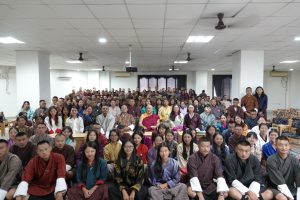
Global interest in mindfulness has been expanding rapidly, simultaneously diversifying its interpretation. Bhutan’s opportunity lies in preserving its spiritual roots, grounded in altruism, bodhicitta, service, and a sense of community, while building systems, institutions, and communities that embody mindful governance for the benefit of all.
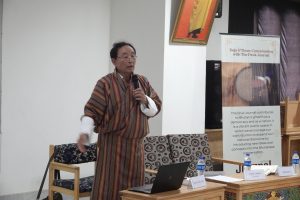
The conversation was moderated by the journal’s editor, Dasho Kinley Dorji, and featured insightful reflections from writers that included Lopon Lungtaen Gyatsho, Ms. Phub Dem, Dr Joel and Michelle Levey ( online) and Siok Sian Pek ( from the audience).
Discussions centred around how to integrate mindfulness into governance, policies, and practices. And how to balance mindfulness with a sense of competitiveness. The gathering also discussed the idea of mindful prosperity, and that it also requires a sense of social awareness and greater social well-being. Participants shared some of their plans and ideas and also expressed interest in how to popularise mindfulness in Geylephu.
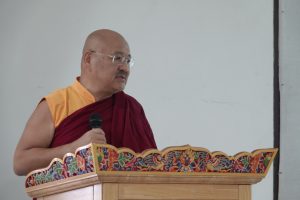
“The session was truly enriching. I was inspired by the curiosity and genuine concern shown by everyone. With this level of awareness and commitment, I am confident that Pelsups will meaningfully contribute to GMC’s development.” -Phub Dem, a participant of the Pelsung programme.
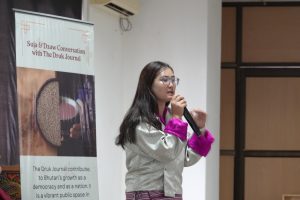
The Druk Journal publication and conversation were supported by the Bhutan Foundation.
Media and Democracy Clubs (MDC) Citizen Journalism Training: Monitoring and Evaluation
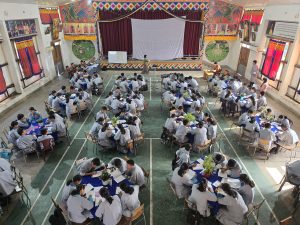
The Bhutan Centre for Media and Democracy conducted MDC Citizen Journalism Trainings from 22nd to 26th October 2025 at Dorokha Central School and Peljorling Higher Secondary School in Samtse Dzongkhag. The workshops engaged over 220 students and teachers, strengthening their understanding of media literacy, responsible reporting, and digital citizenship.
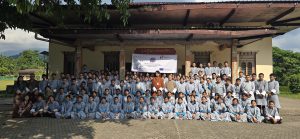
Importantly, the sessions were facilitated by teachers who had previously undergone a Training of Trainers (ToT) under the same EU-funded project, ensuring that the knowledge and facilitation skills are sustained within schools through a peer-led approach.
Students explored key concepts of Media and Information Literacy (MIL) and citizen journalism through interactive sessions, photography, videography, and story development exercises. The workshops combined theory with hands-on practice, helping students recognise misinformation, apply ethical journalism principles, and tell stories from their own communities.
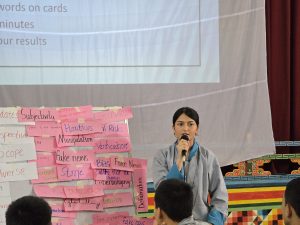
At Dorokha Central School, students demonstrated high enthusiasm, particularly in applying photography and video storytelling to real-life issues such as local flood reporting. “We used to believe everything we saw on Facebook, but now we are more careful,” shared Jharna Thapa, Class 10.
Similarly, at Peljorling HSS, 124 students and 8 staff members participated in sessions on responsible sharing, interview techniques, and content creation. “Students have become more responsible digital citizens and aware of their role in promoting constructive discussions online,” reflected the school’s MDC Coordinator.
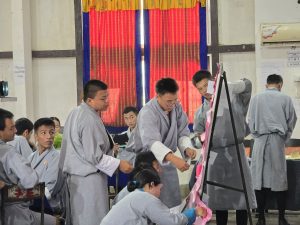
The trainings highlighted the importance of follow-up mentorship, peer learning, and digital resource support to sustain engagement and enhance MDC activities. With continued guidance and resources, MDCs can serve as powerful platforms for nurturing informed, ethical, and responsible youth voices in Bhutan’s growing media landscape.